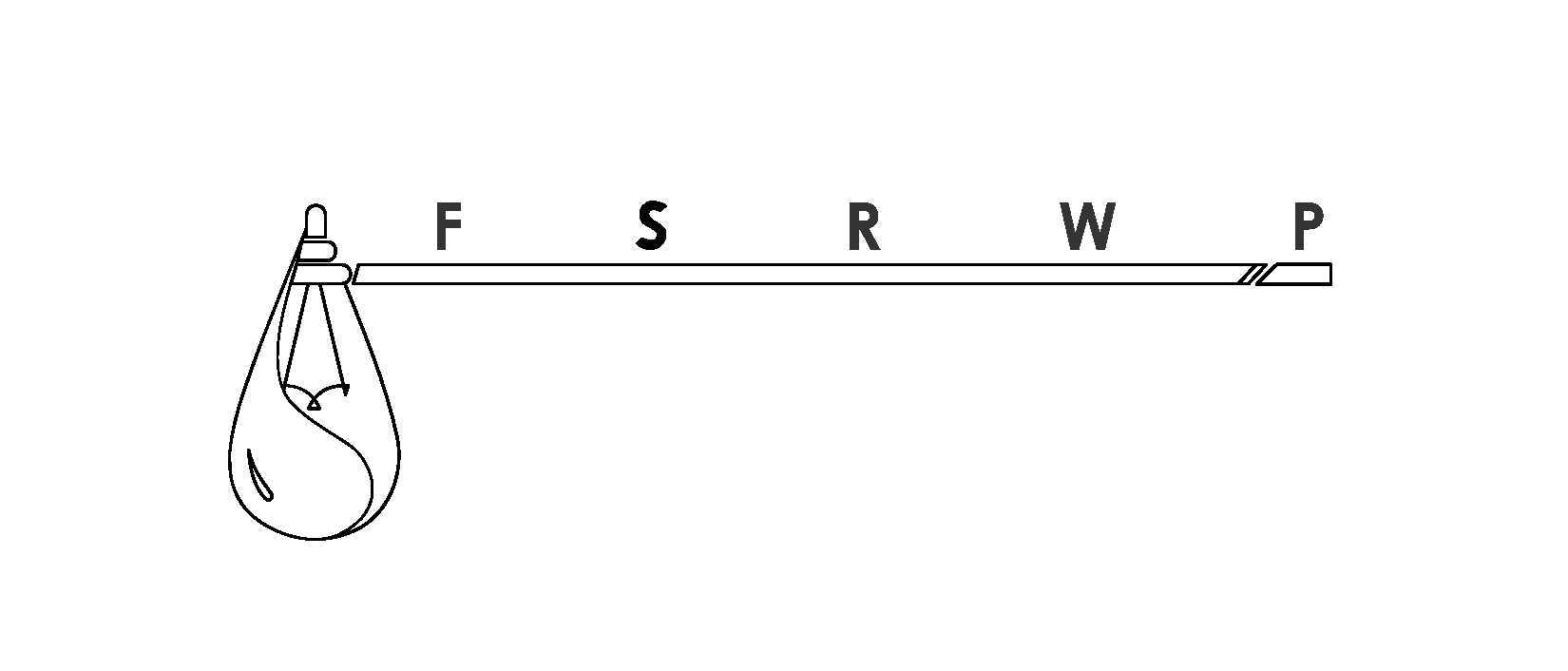
Marine terminals and processes for using same. In some embodiments, the marine terminal can include a buoyant structure configured to be moored to a scabed via first and second mooring structures. The first mooring structure can include an elongated member, a mooring leg configured to be attached to the seabed and to the elongated member, and a coupler configured to provide an articulated connection about at least two axes of rotation between the elongated member and the buoyant structure. The second mooring structure can include a mooring linc anchor configured to be connected to the buoyant structure and the scabed or a second elongated member, a second mooring leg configured to be attached to the seabed and to the second elongated member, and a second coupler configured to provide an articulated connection about at least two axes of rotation between the second elongated member and the buoyant structure.
The present invention provides an inspection system and an inspection method which make it possible to shorten a tank inspection period. The present invention comprises: a replacement step for replacing a gas inside a body 5 with another gas via a connection port 8, in a state in which a first opening/closing port 6 and a second opening/closing port 7 are closed; an introduction step for opening the second opening/closing port 7 and introducing a robot 3 into the inside of a tank; a work step in which the robot 3 performs work inside the tank; a recovery step for recovering the robot 3 inside the body 5 and closing the second opening/closing port 7; and a re-replacement step for replacing the gas inside the body 5 with another gas via the connection port 8.
Systems for transferring fluid across a boundary between a first body rotatively coupled to a second body that can include first, second, third, fourth, and fifth fluid conduits and first and second fluid swivels. The first conduit can be disposed on the first body and in communication with the second conduit. The third conduit can be disposed on the second body and in communication with the fourth conduit. The first and second swivels can each include a fixed part rotatively coupled to a rotating part. The rotating part of the first swivel can be in communication with the first conduit. The fixed part of the second swivel can be in communication with the third conduit. The fifth conduit can maintain communication between either one of: (i) the fixed part of the first swivel and the fourth conduit and (ii) the second conduit and the rotating part of the second swivel.
F16L 39/06 - Raccords ou accessoires de raccordement pour tuyaux à double paroi ou à canaux multiples ou pour assemblages de tuyaux du type rotatif multiligne, p. ex. comprenant plusieurs modules montés axialement
E21B 43/01 - Procédés ou dispositifs pour l'extraction de pétrole, de gaz, d'eau ou de matériaux solubles ou fusibles ou d'une suspension de matières minérales à partir de puits spécialement adaptés à l'extraction à partir d'installations sous l'eau
4.
SYSTEMS FOR TRANSFERRING FLUID(S), ELECTRICITY, AND/OR SIGNAL(S) ACROSS A BOUNDARY AND PROCESSES FOR ASSEMBLING SAME
Systems for transferring fluid across a boundary between a first body rotatively coupled to a second body. The system can include first fluid and utility conduits on the first body, second fluid and utility conduits on the second body, and a swivel assembly including a fluid swivel, a utility swivel, a third fluid conduit in communication with the fluid swivel, and a third utility conduit in communication with the utility swivel. The system can include first and second connectors to connect the first fluid conduit to the fluid swivel and the second and third fluid conduits, first and second utility connectors to connect the first utility conduit to the utility swivel and the second and third utility conduits, a deployment frame coupled to the swivel assembly, and alignment guides having a first part on the second body and a second part on the deployment frame that engage with one another.
H01R 13/00 - Détails de dispositifs de couplage des types couverts par les groupes ou
F16L 27/08 - Raccords réglablesRaccords permettant un déplacement des parties raccordées permettant un réglage ou déplacement uniquement autour de l'axe de l'un des tuyaux
5.
CONDUIT SUPPORT ASSEMBLIES AND PROCESSES FOR USING SAME
Conduit support assemblies and processes for using same. In some embodiments, the conduit support assembly can include a support apparatus configured to be disposed on a guide tube of a structure floating in water. The support apparatus can include a support tube, a load ring attached to the support tube and moveable relative to the support tube, a support shoulder, a first seal, and a split ring assembly. The conduit support assembly can also include a hang- off adapter configured to be secured to the conduit and can include a first load shoulder. The support apparatus can be configured to allow the hang-off adapter to pass partially through the support apparatus. The first load shoulder can be configured to engage with the split ring assembly and, when loaded, the first seal can be deformed to create a barrier between an exterior surface of the hang-off adaptor and the support apparatus.
F16L 1/20 - Accessoires à cet effet, p. ex. flotteurs ou poids de lestage
E21B 19/00 - Manipulation de tiges, tubages, tubes ou autre objets analogues à l'extérieur du trou de forage, p. ex. dans la tour de forageAppareils pour faire avancer les tiges ou les câbles
E21B 43/01 - Procédés ou dispositifs pour l'extraction de pétrole, de gaz, d'eau ou de matériaux solubles ou fusibles ou d'une suspension de matières minérales à partir de puits spécialement adaptés à l'extraction à partir d'installations sous l'eau
6.
DISCONNECTABLE YOKE MOORING SYSTEMS AND PROCESSES FOR USING SAME
Yoke mooring systems and processes for using same. The system can include a turntable connected to and rotatable with respect to a base. A yoke can be connected to the turntable such that the yoke can at least partially rotate about a longitudinal axis of the yoke and at least partially rotate about a second axis that can be orthogonal to the longitudinal axis. A first and second link arm can be connected to the yoke and to a first component of a first and a second releasable connector, respectively. A first and second lifting line can be connected to the second end of the first and second link arms, respectively. A first and second lifting device can be disposed on a vessel and configured to be connected to a second end of the first and second lifting lines, respectively, to lift and lower the link arms and the yoke.
37 - Services de construction; extraction minière; installation et réparation
39 - Services de transport, emballage et entreposage; organisation de voyages
40 - Traitement de matériaux; recyclage, purification de l'air et traitement de l'eau
Produits et services
Wind turbines and support structure therefor; turbines,
other than for land vehicles; turbines, other than for land
vehicles, and their parts and accessories; wind turbines;
windmills; wind-powered installations for generating
electricity [wind farms]. Construction of wind turbines; installation, maintenance,
repair and repair consultancy of windmills and wind
turbines. Transmission and distribution of electrical power; providing
information relating to distribution and transmission of
electricity. Generation of electrical power; production of electrical
energy; providing information relating to the generation of
electrical power; rental of wind-powered electricity
generators.
Mooring systems for mooring a vessel floating on a surface of a body of water. In some embodiments, the mooring system can include a mooring structure and a mooring let. The mooring structure can be configured to be connected to a seabed. The vessel can be configured to be connected to the mooring structure such that the vessel can be partially rotatable with respect to an axis of the mooring structure. A first end of the mooring leg can be configured to be connected to the vessel. A second end of the mooring leg can be configured to be connected to the seabed.
Connector assemblies and processes for using same. In some embodiments, a connector assembly can include a stinger and a sleeve assembly. An outer surface of the stinger can define first and second grooves. The sleeve assembly can include a structural ring, a support ring, and first and second retainer rings. The structural ring can define a first shoulder. The support ring can be connected to the structural ring and can define a second shoulder. The first and second retainer rings can be independently movable between an unlocked position and a locked position. When the stinger is positioned within the sleeve assembly, the first retainer ring can maintain a first split ring in a position partially within the first groove and partially on the first shoulder and/or the second retainer ring can maintain a second split ring in a position partially within the second groove and partially on the second shoulder.
Mooring systems for mooring a vessel floating on a surface of a body of water. In some embodiments, the mooring system can include a mooring structure and a mooring let. The mooring structure can be configured to be connected to a seabed. The vessel can be configured to be connected to the mooring structure such that the vessel can be partially rotatable with respect to an axis of the mooring structure. A first end of the mooring leg can be configured to be connected to the vessel. A second end of the mooring leg can be configured to be connected to the seabed.
Connector assemblies and processes for using same. In some embodiments, a connector assembly can include a stinger and a sleeve assembly. An outer surface of the stinger can define first and second grooves. The sleeve assembly can include a structural ring, a support ring, and first and second retainer rings. The structural ring can define a first shoulder. The support ring can be connected to the structural ring and can define a second shoulder. The first and second retainer rings can be independently movable between an unlocked position and a locked position. When the stinger is positioned within the sleeve assembly, the first retainer ring can maintain a first split ring in a position partially within the first groove and partially on the first shoulder and/or the second retainer ring can maintain a second split ring in a position partially within the second groove and partially on the second shoulder.
37 - Services de construction; extraction minière; installation et réparation
39 - Services de transport, emballage et entreposage; organisation de voyages
40 - Traitement de matériaux; recyclage, purification de l'air et traitement de l'eau
Produits et services
Wind turbines and support structure therefor; turbines, other than for land vehicles; turbines, other than for land vehicles, and their parts and accessories; wind turbines; windmills; wind-powered installations for generating electricity [wind farms] Construction of wind turbines; installation, maintenance, repair and repair consultancy of windmills and wind turbines Transmission and distribution of electrical power; providing information relating to distribution and transmission of electricity Generation of electrical power; production of electrical energy; providing information relating to the generation of electrical power; rental of wind-powered electricity generators
The present invention addresses the problem of providing a taut-moored floating structure that is taut-moored by a plurality of taut mooring cables, the taut-moored floating structure reducing shaking due to wind or waves, preventing an instantaneous increase in load on the taut mooring cables, and reducing fluctuations in the load on the taut mooring cables when shaking occurs. The problem is solved by a taut-moored floating structure 1 that supports an offshore wind power generation system, the taut-moored floating structure comprising a floating structure 5 and three sets of taut mooring cables 7 that connect seabed mooring parts 9 fixed to the seabed and connection parts 5b. Each column 51, 52, 53 of the floating structure 5 is provided with the connection parts 5b on an outside portion of an overhang part 6 overhanging outward. Each set of taut mooring cables 7 is composed of at least three taut mooring cables. When tension is generated in each taut mooring cable 7 by buoyancy generated in the floating structure 5 and the floating structure 5 is held in a tautly-moored state, distances between one set of taut mooring cables 7 which are connected to one column 51 are substantially equal to each other and are between the connection parts 5b and the seabed mooring parts 9, and an angle formed by the one set of taut mooring cables with respect to a vertical line is 15° or less.
B63B 21/50 - Dispositifs d'ancrage pour navires spéciaux, p. ex. pour plates-formes flottantes de forage ou dragues
B63B 21/00 - Apparaux de manœuvreApparaux de déhalage, de remorquage ou de pousséeAncrage
B63B 35/00 - Embarcations ou structures flottantes similaires spécialement adaptées à des finalités spécifiques et non prévues ailleurs
F03D 13/25 - Dispositions pour monter ou supporter des mécanismes moteurs à ventPylônes ou tours pour des mécanismes moteurs à vent spécialement adaptés à l’installation offshore
Connectors assemblies. The connector assembly can include a stinger and a sleeve assembly that includes a latching mechanism. An outer surface of the stinger can define first and second grooves located toward first and second ends, respectively, thereof. An inner surface of the sleeve assembly can define first and second shoulders located toward first and second ends, respectively, thereof. The latching mechanism can be in an unlocked position or a locked position. When the latching mechanism is unlocked the stinger can be inserted into or removed from the sleeve assembly. When the stinger is within the sleeve assembly and the latching mechanism is locked, the latching mechanism can maintain a first split ring partially within the first groove and partially on the first shoulder and a second split ring partially within the second groove and partially on the second shoulder to secure the stinger within the sleeve assembly.
F16B 21/18 - Dispositifs sans filetage pour empêcher le mouvement relatif selon l'axe d'une broche, d'un ergot, d'un arbre ou d'une pièce analogue par rapport à l'organe qui l'entoureFixations à ergots et douilles largables sans filetage à parties séparées par gorges ou encoches pratiquées dans l'axe ou l'arbre et avec bague annulaire formant ressort insérée dans la gorge (circlip) ou autre dispositif élastique de fixation du même genreDispositifs sans filetage pour empêcher le mouvement relatif selon l'axe d'une broche, d'un ergot, d'un arbre ou d'une pièce analogue par rapport à l'organe qui l'entoureFixations à ergots et douilles largables sans filetage à parties séparées par gorges ou encoches pratiquées dans l'axe ou l'arbre Détails
15.
SYSTEMS CONFIGURED TO MOOR A FLOATING STRUCTURE TO A SEABED AND PROCESSES FOR USING SAME
Systems for mooring a floating structure to a seabed and processes for using same. The system can include a hybrid tether that includes a stiff elongated member and a compliant elongated member configured to be connected to one another in a series arrangement. The system can also include a first connector configured to connect a first end of the hybrid tether to an anchor secured to the seabed and a second connector configured to connect a second end of the hybrid tether to the floating structure. An axial stiffness of the stiff member can be greater than an axial stiffness of the compliant member. The first and second connectors can be configured to allow the first and second ends of the hybrid tether to pivot relative to the anchor and the floating structure. The hybrid tether can be substantially vertical when connected to the anchor and the floating structure.
Systems for mooring a floating structure to a seabed and processes for using same. The system can include a mooring leg, a first weight and a second weight configured to be connected to the mooring leg toward a first end and a second end thereof, respectively, and a first buoy configured to be connected to the mooring leg between the first and second weights. The first end of the mooring leg can be configured to be connected to an anchor disposed on the seabed. The second end of the mooring leg can be configured to be connected to the structure. The mooring leg can include a chain, a wire rope, a rope formed from a polymer, or a combination thereof. The first and second weights and the first buoy can be configured to be located at an elevation above the seabed and below the surface of the body of water.
37 - Services de construction; extraction minière; installation et réparation
42 - Services scientifiques, technologiques et industriels, recherche et conception
Produits et services
Steel structure construction works; construction services
relating to ocean development, coastal development, or the
development of offshore oil, gas, or mineral resources;
repair or maintenance of subsea oil or gas drilling rigs,
subsea oil extraction machines, subsea gas extraction
machines, metal or plastic storage tanks for offshore oil or
gas storage, metal or plastic pipelines for offshore oil or
gas transportation, and tension-leg or fixed offshore
platform facilities equipped with these facilities; repair
or maintenance of vessels equipped with subsea oil or gas
drilling rigs, subsea oil extraction machines, subsea gas
extraction machines, metal or plastic storage tanks for
offshore oil or gas storage, or metal or plastic pipelines
for offshore oil or gas transportation; rental of subsea oil
or gas drilling rigs, subsea oil extraction machines, subsea
gas extraction machines, metal or plastic storage tanks for
offshore oil or gas storage, and metal or plastic pipelines
for offshore oil or gas transportation. Architectural design services; surveying; design of
buildings or structures for ocean development, coastal
development, or the development of offshore oil, gas, or
mineral resources; design of vessels or machines for ocean
development, coastal development, or the development of
offshore oil, gas, or mineral resources; geological
surveying; providing technical information or consultancy
relating to ocean development, coastal development, or the
development of offshore oil, gas, or mineral resources;
providing technological consultancy or engineering services
relating to tension-leg offshore platforms or fixed offshore
platforms equipped with subsea oil or gas drilling rigs,
subsea oil extraction machines, subsea gas extraction
machines, metal or plastic storage tanks for offshore oil or
gas storage, or metal or plastic pipelines for offshore oil
or gas transportation, and provision of information thereof;
providing technological consultancy or engineering services
relating to vessels or machines for ocean development,
coastal development, or the development of offshore oil,
gas, or mineral resources, and provision of information
thereof; provision of technological information and
consultancy services relating to the operation, running or
management of subsea drilling rigs for oil or gas, subsea
oil production units, subsea gas production units, metal or
plastic storage tanks for offshore oil or gas storage, and
metal or plastic pipes for offshore oil or gas
transportation and provision of technical information and
consulting services relating to the operation, running or
management of vessels equipped with the aforementioned
machinery, offshore tension-leg platform facilities, and
offshore fixed platform facilities; provision of
technological information and consultancy services relating
to maintenance and repair of subsea drilling rigs for oil or
gas, subsea oil production units, subsea gas production
units, metal or plastic storage tanks for offshore oil or
gas storage, and metal or plastic pipes for offshore oil or
gas transportation and provision of technological
information and consultancy services relating to maintenance
and repair of vessels equipped with the aforementioned
machinery, offshore tension-leg platform facilities, and
offshore fixed platform facilities.
19.
FLUID SWIVELS AND PROCESSES FOR PIGGING THERETHROUGH
Apparatus that include fluid swivels and processes for pigging through the fluid swivels. In some embodiments, the apparatus can include a fluid swivel. The fluid swivel can include a fixed part that defines a first longitudinal fluid path therethrough and a first radial fluid path in fluid communication with the first longitudinal fluid path. The fluid swivel can also include a rotating part that defines a first radial fluid path therethrough. The first longitudinal fluid path can be configured to pass a pig therethrough. The first fixed part and the first rotating part can define a first toroidal fluid path therebetween that can be in fluid communication with the first radial fluid path defined by the fixed part and the first radial fluid path defined by the rotating part.
F16L 55/46 - Lancement ou récupération des hérissons ou des chariots
F16L 39/06 - Raccords ou accessoires de raccordement pour tuyaux à double paroi ou à canaux multiples ou pour assemblages de tuyaux du type rotatif multiligne, p. ex. comprenant plusieurs modules montés axialement
20.
FLUID SWIVELS AND PROCESSES FOR PIGGING THERETHROUGH
Apparatus that include fluid swivels and processes for pigging through the fluid swivels. In some embodiments, the apparatus can include a fluid swivel. The fluid swivel can include a fixed part that defines a first longitudinal fluid path therethrough and a first radial fluid path in fluid communication with the first longitudinal fluid path. The fluid swivel can also include a rotating part that defines a first radial fluid path therethrough. The first longitudinal fluid path can be configured to pass a pig therethrough. The first fixed part and the first rotating part can define a first toroidal fluid path therebetween that can be in fluid communication with the first radial fluid path defined by the fixed part and the first radial fluid path defined by the rotating part.
F16L 27/08 - Raccords réglablesRaccords permettant un déplacement des parties raccordées permettant un réglage ou déplacement uniquement autour de l'axe de l'un des tuyaux
F16L 55/46 - Lancement ou récupération des hérissons ou des chariots
F16L 39/06 - Raccords ou accessoires de raccordement pour tuyaux à double paroi ou à canaux multiples ou pour assemblages de tuyaux du type rotatif multiligne, p. ex. comprenant plusieurs modules montés axialement
The present invention addresses the problem of providing a tension-mooring cable for a tension-moored floating body, with which it is possible to, without adjusting the lengths of the tension-mooring cables in each mooring cable bundle that moors and supports the tension-moored floating body, equalize tension generated in the tension-mooring cables and prevent occurrence of resonance with the frequency of waves on the ocean. The problem is solved by a mooring cable that is for a tension-moored floating body, and that links a connection part 5b formed on the tension-moored floating body and a sea bottom-mooring part 9 fixed to a sea bottom 103. The tension-mooring cable is configured such that tension is generated in a tension-mooring cable 7 due to buoyancy generated in a tension-moored floating body 5 when the tension-mooring cable 7 is linked to the tension-moored floating body 5, and the tension-moored floating body 5 can be held in a tension-moored state. The tension-mooring cable 7 is configured such that a low rigidity mooring cable 7b, having a low extensional rigidity which is the product of the modulus of longitudinal elasticity and the cross-sectional area of a cable material, is linked to a high rigidity mooring cable 7a having a higher extensional rigidity than that of the low rigidity mooring cable 7b, by a linking tool.
B63B 21/20 - Adaptations des chaînes, amarres, aussières ou matériels analogues, ou de leurs éléments
B63B 35/00 - Embarcations ou structures flottantes similaires spécialement adaptées à des finalités spécifiques et non prévues ailleurs
F03D 13/25 - Dispositions pour monter ou supporter des mécanismes moteurs à ventPylônes ou tours pour des mécanismes moteurs à vent spécialement adaptés à l’installation offshore
22.
SYSTEMS AND PROCESSES FOR MOORING A VESSEL AND TRANSFERRING ENERGY TO OR FROM A VESSEL
Systems and processes for mooring a vessel. The system can include a buoy that includes a fixed part rotatively coupled to a rotating part. A first swivel can be disposed on the buoy that includes a fixed part rotatively coupled to a rotating part, with the fixed part of the first swivel coupled to the fixed part of the buoy. A second swivel can be disposed on the buoy that includes a fixed part rotatively coupled to a rotating part, with the fixed part of the second swivel coupled to the rotating part of the buoy. A spool can be coupled to and configured to rotate with the rotating part of the second swivel. A central longitudinal axis of the first swivel can be oriented vertically with respect to the buoy and a central longitudinal axis of the second swivel can be oriented substantially horizontally with respect to the buoy.
A joint 80 comprises: a cylindrical part 82 having an inner peripheral surface 82a and an outer peripheral surface 82b; a projection part 84 concentric with the cylindrical part 82 and forming an annular shape projecting in a radial direction from the outer peripheral surface 82b, the projection part 84 having end surfaces 84a, 84b facing in an axial direction; and a first connection part 86 forming the annular shape concentric with the cylindrical part 82 between the cylindrical part 82 and the projection part 84, the first connection part 86 continuously connecting the outer peripheral surface 82b and the end surfaces 84a, 84b. The cylindrical part 82, the projection part 84, and the first connection part 86 are integrally formed from the same forged material 80S.
B63B 35/00 - Embarcations ou structures flottantes similaires spécialement adaptées à des finalités spécifiques et non prévues ailleurs
B63B 75/00 - Construction ou assemblage de structures flottantes en pleine mer, p. ex. plateformes semi-submersibles, plateformes SPAR ou plateformes d’éoliennes
F03D 13/25 - Dispositions pour monter ou supporter des mécanismes moteurs à ventPylônes ou tours pour des mécanismes moteurs à vent spécialement adaptés à l’installation offshore
24.
SYSTEMS AND PROCESSES FOR MOORING A VESSEL AND TRANSFERRING ENERGY TO OR FROM THE VESSEL
Systems and processes for mooring a vessel. The system can include a buoy that includes a fixed part rotatively coupled to a rotating part. A first swivel can be disposed on the buoy that includes a fixed part rotatively coupled to a rotating part, with the fixed part of the first swivel coupled to the fixed part of the buoy. A second swivel can be disposed on the buoy that includes a fixed part rotatively coupled to a rotating part, with the fixed part of the second swivel coupled to the rotating part of the buoy. A spool can be coupled to and configured to rotate with the rotating part of the second swivel. A central longitudinal axis of the first swivel can be oriented vertically with respect to the buoy and a central longitudinal axis of the second swivel can be oriented substantially horizontally with respect to the buoy.
Processes and systems for recovering heat and generating power. In some embodiments, the process can include combusting a fuel to produce a heated exhaust gas. Heat can be indirectly transferred from the heated exhaust gas to a pre-heated first aqueous fluid to produce a steam feed and a first cooled exhaust gas. At least a portion of the steam feed can be introduced into a steam turbine generator to produce power and a cooled first aqueous fluid. Heat can be indirectly transferred from the first cooled exhaust gas to a cooled second aqueous fluid to produce a heated second aqueous fluid and a second cooled exhaust gas. Heat can be indirectly transferred from the heated second aqueous fluid to the cooled first aqueous fluid to produce the pre-heated first aqueous fluid and an intermediately cooled second aqueous fluid.
F01K 23/10 - Ensembles fonctionnels caractérisés par plus d'une machine motrice fournissant de l'énergie à l'extérieur de l'ensemble, ces machines motrices étant entraînées par des fluides différents les cycles de ces machines motrices étant couplés thermiquement la chaleur de combustion provenant de l'un des cycles chauffant le fluide dans un autre cycle le fluide à la sortie de l'un des cycles chauffant le fluide dans un autre cycle
F22D 1/18 - Appareils de chauffage d'eau d'alimentation, p. ex. préchauffeurs avec tubes d'eau disposés ailleurs que dans le foyer de la chaudière, les tubes de fumées ou sur le trajet des fumées et à chauffage indirect
26.
ARTICULATED MECHANICAL CONNECTORS AND PROCESSES FOR USING SAME
Articulated mechanical connectors and processes for using same. The connector can include a first connector part and a second connector part. The first connector part can include a gimbal table, first and second trunnions disposed on the gimbal table, a first arm, and a stopper assembly. The second connector part can include a second arm. The second arm can include one or more shoulders disposed between a first end and a second end of the second arm. The second arm can be configured to be at least partially disposed within an aperture defined by the first arm such that one of the one or more shoulders can engage with the stopper assembly.
Articulated mechanical connectors and processes for using same. The connector can include a first connector part and a second connector part. The first connector part can include a gimbal table, first and second trunnions disposed on the gimbal table, a first arm, and a stopper assembly. The second connector part can include a second arm. The second arm can include one or more shoulders disposed between a first end and a second end of the second arm. The second arm can be configured to be at least partially disposed within an aperture defined by the first arm such that one of the one or more shoulders can engage with the stopper assembly.
Mechanical joints and processes for using same. The joint can include a turntable having a first part and a second part rotatively connected to the first part and configured to rotate about a first axis. First and second supports can extend from opposing sides of a bore defined by the second part. The joint can include a body that includes first and second trunnions extending from a first pair of opposing sides thereof aligned along a second axis. A second pair of opposing sides of the body can define second and third bores aligned along a third axis. The joint can also include a pin configured to connect a member to the body such that when the member is connected to the body and the first and second trunnions are supported by the first and second supports, the member can rotate about the first, second, and third axes.
Mechanical joints and processes for using same. The joint can include a turntable having a first part and a second part rotatively connected to the first part and configured to rotate about a first axis. First and second supports can extend from opposing sides of a bore defined by the second part. The joint can include a body that includes first and second trunnions extending from a first pair of opposing sides thereof aligned along a second axis. A second pair of opposing sides of the body can define second and third bores aligned along a third axis. The joint can also include a pin configured to connect a member to the body such that when the member is connected to the body and the first and second trunnions are supported by the first and second supports, the member can rotate about the first, second, and third axes.
Offshore floating platform systems and processes for mooring same, In some embodiments, the offshore floating platform system can include a hull structure configured to float on a surface of a body of water, one or more anchors configured to be secured to a seabed, and one or more mooring lines configured to be connected to the hull structure at a first end thereof and to the anchor at a second end thereof. When the one or more anchors are secured to the seabed and the one or more mooring lines are connected to the hull structure and a corresponding anchor, the mooring lines can be substantially vertical and a peak response period of the offshore floating platform system in a pitch or a roll direction can be greater than a peak spectral period of a wave spectrum on the surface of the body of water.
Mechanical joints and processes for using same. The mechanical joint can include a gimbal table that can define a first and second bearing surface and include a first and second trunnion extending from a pair of opposing sides. The arm can include a third and fourth trunnion disposed toward a second end thereof. The third and fourth trunnion can be aligned along a first axis and the first and second trunnion can be aligned along a second axis. The first and second axes can be substantially orthogonal or substantially perpendicular to one another. The third trunnion and the first bearing surface and the fourth trunnion and the second bearing surface, respectively, can be engaged with one another. The arm can be rotatable relative to the gimbal table about the first axis, and at least a portion of the arm can be disposed through an aperture defined by the gimbal table.
Mechanical joints and processes for using same. The mechanical joint can include a gimbal table that can define a first and second bearing surface and include a first and second trunnion extending from a pair of opposing sides. The arm can include a third and fourth trunnion disposed toward a second end thereof. The third and fourth trunnion can be aligned along a first axis and the first and second trunnion can be aligned along a second axis. The first and second axes can be substantially orthogonal or substantially perpendicular to one another. The third trunnion and the first bearing surface and the fourth trunnion and the second bearing surface, respectively, can be engaged with one another. The arm can be rotatable relative to the gimbal table about the first axis, and at least a portion of the arm can be disposed through an aperture defined by the gimbal table.
Systems and processes for pigging. The system can include an inline swivel, a toroidal swivel and a plurality of conduits, each conduit including a valve. A first conduit can be in communication with a supply conduit and the inline swivel. A second conduit can be in communication with the toroidal swivel and the first conduit. A third conduit can be in communication with the first conduit and a first return conduit. A fourth conduit can be in communication with the toroidal swivel and the third conduit. A fifth conduit can be in communication with the inline swivel and a discharge conduit. A sixth conduit can be in communication with the toroidal swivel and the fifth conduit. A seventh conduit can be in communication with the fifth conduit and a second return conduit. An eighth conduit can be in communication with the toroidal swivel and the seventh conduit.
Systems and processes for pigging. The system can include an inline swivel, a toroidal swivel and a plurality of conduits, each conduit including a valve. A first conduit can be in communication with a supply conduit and the inline swivel. A second conduit can be in communication with the toroidal swivel and the first conduit. A third conduit can be in communication with the first conduit and a first return conduit. A fourth conduit can be in communication with the toroidal swivel and the third conduit. A fifth conduit can be in communication with the inline swivel and a discharge conduit. A sixth conduit can be in communication with the toroidal swivel and the fifth conduit. A seventh conduit can be in communication with the fifth conduit and a second return conduit. An eighth conduit can be in communication with the toroidal swivel and the seventh conduit.
Marine terminals and processes for using same. In some embodiments, the marine terminal can include a buoyant structure configured to be moored to a seabed via first and second mooring structures. The first mooring structure can include an elongated member, a mooring leg configured to be attached to the seabed and to the elongated member, and a coupler configured to provide an articulated connection about at least two axes of rotation between the elongated member and the buoyant structure. The second mooring structure can include a mooring line anchor configured to be connected to the buoyant structure and the seabed or a second elongated member, a second mooring leg configured to be attached to the seabed and to the second elongated member, and a second coupler configured to provide an articulated connection about at least two axes of rotation between the second elongated member and the buoyant structure.
B63B 21/50 - Dispositifs d'ancrage pour navires spéciaux, p. ex. pour plates-formes flottantes de forage ou dragues
B63B 27/34 - Aménagement des équipements de bord pour l'embarquement ou le débarquement des cargaisons ou des passagers pour le transfert entre des navires en mer ou entre un navire et un poste situé en mer à l'aide de systèmes de canalisations
B63B 21/00 - Apparaux de manœuvreApparaux de déhalage, de remorquage ou de pousséeAncrage
36.
SYSTEMS FOR TRANSFERRING A FLUID TO AND/OR FROM A VESSEL AND PROCESSES FOR USING SAME
Fluid transfer systems and processes for using same. In some embodiments, the system can include a mooring structure, a fluid swivel disposed on the mooring structure, and first and second subsea conduits configured to provide fluid communication between first and second pipelines and first and second flow paths defined by the swivel, respectively. The system can also include first and second surface conduits that can provide fluid communication between a vessel storage tank and the first and second flow paths defined by the swivel, respectively. The system can also include a crossover conduit configured to provide fluid communication between (i) the first and second surface conduits, (ii) the first and second subsea conduits, or (hi) the first subsea conduit and an optional third pipeline. The system can transfer a fluid having a boiling point that is less than an ambient temperature at atmospheric pressure to or from the storage tank.
A mechanical joint configured to provide an articulated connection between a first member and a second member. In some embodiments, the mechanical joint can include a support member (110) and an arm (120). The support member can define an aperture (111) therethrough and a socket (113) on an inner surface thereof. The arm can include a ball (123) disposed on a first end (121) thereof that can be engaged within and supported by the socket defined by the support member. A second end (122) of the arm can extend through the aperture of the support member such that the arm can rotate relative to the support member about a longitudinal axis of the arm and at least partially rotate about two axes that pass through a center point of the ball that are perpendicular to one another and to the longitudinal axis of the arm.
Offshore wind turbine systems and processes for installing same. The system can include a wind turbine generator that can include a plurality of blades connected thereto. The system can also include a first support arm and a second support arm each having a first end and a second end. The system can also include a support structure that can be configured to float on a surface of a body of water that can include first, second, and third columns. The first end of the first support arm and the first end of the second support arm can each support the wind turbine generator at an elevation above the support structure. The second end of the first support arm can be connected to and supported by the first column. The second end of the second support arm can be connected to and supported by the second column.
F03D 13/25 - Dispositions pour monter ou supporter des mécanismes moteurs à ventPylônes ou tours pour des mécanismes moteurs à vent spécialement adaptés à l’installation offshore
B63B 21/50 - Dispositifs d'ancrage pour navires spéciaux, p. ex. pour plates-formes flottantes de forage ou dragues
B63B 43/06 - Amélioration de la sécurité des navires, p. ex. contrôle des avaries, non prévue ailleurs réduisant le risque de chavirer ou de sombrer par augmentation de la stabilité employant des réservoirs de ballastage
F03D 9/25 - Mécanismes moteurs à vent caractérisés par l’appareil entrainé l’appareil étant un générateur électrique
B63B 35/44 - Constructions, magasins, plates-formes de forage ou ateliers flottants, p. ex. portant des appareils séparateurs huile-eau
F03D 13/10 - Assemblage de mécanismes moteurs à ventDispositions pour l’érection de mécanismes moteurs à vent
40.
OFFSHORE WIND TURBINE SYSTEMS AND PROCESSES FOR INSTALLING SAME
Offshore wind turbine systems and processes for installing same. The system can include a wind turbine generator that can include a plurality of blades connected thereto. The system can also include a first support arm and a second support arm each having a first end and a second end. The system can also include a support structure that can be configured to float on a surface of a body of water that can include first, second, and third columns. The first end of the first support arm and the first end of the second support arm can each support the wind turbine generator at an elevation above the support structure. The second end of the first support arm can be connected to and supported by the first column. The second end of the second support arm can be connected to and supported by the second column.
F03D 13/25 - Dispositions pour monter ou supporter des mécanismes moteurs à ventPylônes ou tours pour des mécanismes moteurs à vent spécialement adaptés à l’installation offshore
B63B 35/44 - Constructions, magasins, plates-formes de forage ou ateliers flottants, p. ex. portant des appareils séparateurs huile-eau
A mooring system for mooring a vessel floating on a surface of a body of water. The system can include a base structure, a mooring leg, a column, and a turntable. The mooring leg can include a first end configured to be attached to a seabed and a second end configured to be attached to the base structure. The column can include a first end attached to the base structure. The turntable can include a rotating part and a fixed part. A second end of the column can be configured to be connected to the fixed part of the turntable via a dual axis joint. The rotating part of the turntable can be configured to be connected to the vessel. The base structure can be configured to be elevated above of the seabed when the second end of the column is connected to the fixed part of the turntable.
A mooring system for mooring a vessel floating on a surface of a body of water. In some embodiments, the system can include a base structure configured to be secured to a seabed, a yoke configured to be pivotably connected at a first end to the base structure about an axis of the base structure, a weight connected to the yoke, a turntable that can include a rotating part configured to be disposed on the vessel and a fixed part, a link arm that can include a first end configured to be connected to a second end of the yoke and/or the weight and a second end configured to be connected to the fixed part of the turntable such that the vessel is rotatable with respect to the link arm about a central axis of the turntable.
A chain brace for restricting relative movement between first, second, and third serially connected links of a chain. The chain brace can include a wedge block defining a bore at least partially therethrough, first and second outer blocks, a capture frame that can include a reaction plate that can define a bore therethrough, and a tension member. The capture frame can be configured to position the outer blocks and the wedge block within the second link of the chain. The tension member can be positioned through the bore defined by the reaction plate and into the bore defined by the wedge block to apply a force on the wedge block such that the wedge block displaces the first and second outer blocks into contact with the ends of the first and third links of chain, respectively, to restrict relative movement between the first, second, and third links of the chain.
A chain brace for restricting relative movement between first, second, and third serially connected links of a chain. The chain brace can include a wedge block defining a bore at least partially therethrough, first and second outer blocks, a capture frame that can include a reaction plate that can define a bore therethrough, and a tension member. The capture frame can be configured to position the outer blocks and the wedge block within the second link of the chain. The tension member can be positioned through the bore defined by the reaction plate and into the bore defined by the wedge block to apply a force on the wedge block such that the wedge block displaces the first and second outer blocks into contact with the ends of the first and third links of chain, respectively, to restrict relative movement between the first, second, and third links of the chain.
F16G 13/18 - Chaînes ayant des caractéristiques générales particulières
B63B 21/20 - Adaptations des chaînes, amarres, aussières ou matériels analogues, ou de leurs éléments
B63B 73/40 - Construction ou assemblage de navires ou de structures marines, p. ex. coques ou plateformes en pleine mer caractérisés par les procédés d’assemblage
F16G 15/02 - Maillage des chaînesManilles d'assemblageArticulations de chaîneMaillons de chaîneManchons de chaîne pour jonction plus ou moins permanente
45.
COUPLERS AND MECHANICAL JOINT ASSEMBLIES INCLUDING SAME
A coupler (130) configured to provide an articulated connection about two axes of rotation between a first member and a second member. The coupler (130) can include a first end that defines a first bore (133) therethrough and a second bore (134) at least partially therethrough and a second end that defines a third bore (135) therethrough. The first bore (133) and the second bore (134) can partially intersect one another.
F16D 3/38 - Joints de Hooke ou autres joints avec organe intermédiaire équivalent auquel chaque pièce d'accouplement est reliée par pivot ou par glissement avec un seul organe intermédiaire à tourillons ou paliers disposés sur deux axes perpendiculaires l'un à l'autre
46.
Disconnectable yoke mooring systems and processes for using same
Yoke mooring systems and processes for using same. The system can include a turntable connected to and rotatable with respect to a base. A yoke can be connected to the turntable such that the yoke can at least partially rotate about a longitudinal axis of the yoke and at least partially rotate about a second axis that can be orthogonal to the longitudinal axis. A first and second link arm can be connected to the yoke and to a first component of a first and a second releasable connector, respectively. A first and second lifting line can be connected to the second end of the first and second link arms, respectively. A first and second lifting device can be disposed on a vessel and configured to be connected to a second end of the first and second lifting lines, respectively, to lift and lower the link arms and the yoke.
A connector assembly can include a stinger and a sleeve assembly that includes a latching mechanism. An outer surface of the stinger can define first and second grooves located toward first and second ends, respectively, thereof. An inner surface of the sleeve assembly can define first and second shoulders located toward first and second ends, respectively, thereof. The latching mechanism can be in an unlocked position or a locked position. When the latching mechanism is unlocked the stinger can be inserted into or removed from the sleeve assembly. When the stinger is within the sleeve assembly and the latching mechanism is locked, the latching mechanism can maintain a first split ring partially within the first groove and partially on the first shoulder and a second split ring partially within the second groove and partially on the second shoulder to secure the stinger within the sleeve assembly.
F16B 21/18 - Dispositifs sans filetage pour empêcher le mouvement relatif selon l'axe d'une broche, d'un ergot, d'un arbre ou d'une pièce analogue par rapport à l'organe qui l'entoureFixations à ergots et douilles largables sans filetage à parties séparées par gorges ou encoches pratiquées dans l'axe ou l'arbre et avec bague annulaire formant ressort insérée dans la gorge (circlip) ou autre dispositif élastique de fixation du même genreDispositifs sans filetage pour empêcher le mouvement relatif selon l'axe d'une broche, d'un ergot, d'un arbre ou d'une pièce analogue par rapport à l'organe qui l'entoureFixations à ergots et douilles largables sans filetage à parties séparées par gorges ou encoches pratiquées dans l'axe ou l'arbre Détails
Connectors assemblies. The connector assembly can include a stinger and a sleeve assembly that includes a latching mechanism. An outer surface of the stinger can define first and second grooves located toward first and second ends, respectively, thereof. An inner surface of the sleeve assembly can define first and second shoulders located toward first and second ends, respectively, thereof. The latching mechanism can be in an unlocked position or a locked position. When the latching mechanism is unlocked the stinger can be inserted into or removed from the sleeve assembly. When the stinger is within the sleeve assembly and the latching mechanism is locked, the latching mechanism can maintain a first split ring partially within the first groove and partially on the first shoulder and a second split ring partially within the second groove and partially on the second shoulder to secure the stinger within the sleeve assembly.
Yoke mooring systems and processes for using same. The system can include a turntable connected to and rotatable with respect to a base. A yoke can be connected to the turntable such that the yoke can at least partially rotate about a longitudinal axis of the yoke and at least partially rotate about a second axis that can be orthogonal to the longitudinal axis. A first and second link arm can be connected to the yoke and to a first component of a first and a second releasable connector, respectively. A first and second lifting line can be connected to the second end of the first and second link arms, respectively. A first and second lifting device can be disposed on a vessel and configured to be connected to a second end of the first and second lifting lines, respectively, to lift and lower the link arms and the yoke.
Yoke mooring systems and processes for using same. The system can include a turntable connected to and rotatable with respect to a base. A yoke can be connected to the turntable such that the yoke can at least partially rotate about a longitudinal axis of the yoke and at least partially rotate about a second axis that can be orthogonal to the longitudinal axis. A first and second link arm can be connected to the yoke and to a first component of a first and a second releasable connector, respectively. A first and second lifting line can be connected to the second end of the first and second link arms, respectively. A first and second lifting device can be disposed on a vessel and configured to be connected to a second end of the first and second lifting lines, respectively, to lift and lower the link arms and the yoke.
A link plate system for a connecting a tether to a TLP via a first pin and a second pin. The link plate system may include a plurality of link plates. Each link plate may include a first hole sized to receive the first pin that connects the link plate to the TLP and a second hole sized to receive the second pin that connects the link plate to the tether. The length of each link plates may he sized and the holes of each link plate may be positioned and sized such that a distance between the first pin and the second pin is different for each link plate so as to allow adjustment of the connection length between the TLP and the tether.
Mooring systems and processes for using same. In some embodiments, the system can include a first vessel support structure and a second vessel support structure, each disposed on a vessel. Each vessel support structure can include at least one extension arm can be suspended from each vessel support structure. A ballast tank can be connected to each of the at least one extension arms. A first end of a yoke can be connected to the ballast tank and a second end of the yoke can include a yoke head disposed thereon. The system can also include a first mooring support structure and a second mooring support structure, each fixed in place. Each mooring support structure can include a pitch bearing. The yoke heads of the first and second vessel support structures can be connected to the pitch bearings of the first and second mooring support structures, respectively.
B63B 39/02 - Installations pour diminuer le tangage, le roulis ou autres mouvements similaires indésirables du navireAppareils pour indiquer l'assiette du navire réduisant les mouvements du navire par déplacement de masses
B63B 21/50 - Dispositifs d'ancrage pour navires spéciaux, p. ex. pour plates-formes flottantes de forage ou dragues
B63B 21/00 - Apparaux de manœuvreApparaux de déhalage, de remorquage ou de pousséeAncrage
53.
Systems and processes for recovering a condensate from a conduit
Systems and processes for recovering a condensate from a conduit. In one embodiment, the system can include a floating buoy that can include a fluid swivel assembly coupled thereto. The system can also include a floating conduit, a first gas transfer conduit, and a second gas transfer conduit that can be configured to transfer a gas discharged from a vessel storage tank to a pipeline end manifold located at a subsea location. The system can also include a first condensation conduit, a pump, and a second condensation conduit that can be configured to transfer at least a portion of any condensate that accumulates within an internal volume of the floating conduit at a low point between the vessel storage tank and the first gas transfer conduit into a flow path defined by a first swivel section of the fluid swivel assembly, a storage tank, or a combination thereof.
Systems and processes for transferring a gas from a buoy. In one embodiment, the system can include a single point mooring marine terminal that can include a buoy that can be configured to float in water, a fluid swivel assembly coupled to the buoy, a gas transfer conduit, a gas submarine conduit, and a pipeline end manifold that can be configured to be located at a subsea location. The gas transfer conduit, the fluid swivel assembly, and the gas submarine conduit can be configured to transfer a gas from a vessel storage tank disposed on a vessel to the pipeline end manifold. The gas submarine conduit can include one or more negatively buoyant members coupled thereto. The one or more negatively buoyant members can be configured to urge the gas submarine conduit toward a seafloor to maintain the gas submarine conduit in a Chinese lantern configuration.
Systems and processes for recovering a condensate from a conduit. In one embodiment, the system can include a buoy floating in water that can include a fluid swivel assembly coupled thereto. The system can also include a floating conduit, a first gas transfer conduit, and a second gas transfer conduit that can be configured to transfer a gas discharged from a vessel storage tank to a pipeline end manifold located at a subsea location. The system can also include a first condensation conduit, a pump, and a second condensation conduit that can be configured to transfer at least a portion of any condensate that accumulates within an internal volume of the floating conduit at a low point between the vessel storage tank and the first gas transfer conduit into a flow path defined by a first swivel section of the fluid swivel assembly, a storage tank, or a combination thereof.
Systems and processes for recovering a gas from a vessel. The system can include a buoy that can include a fluid swivel assembly. The fluid swivel assembly can have a first swivel section rotatably coupled to a second swivel section. The system can also include a first liquid transfer conduit, a first gas transfer conduit, a second liquid transfer conduit, and a second gas transfer conduit. The first swivel section and the second swivel section can be configured to maintain fluid communication between the first liquid transfer conduit and the second liquid transfer conduit. The first swivel section and the second swivel section can be configured to maintain fluid communication between the first gas transfer conduit and the second gas transfer conduit. The first gas transfer conduit and the second gas transfer conduit can be configured to convey a gas from a vessel to a subsea location.
Mooring support structures, systems for mooring vessels, and processes for using same. In some embodiments, a system for mooring a vessel can include a mooring support stmcture than can include a post connected at a first end to a turntable disposed on a base stmcture. The post can extend out from the turntable and a yoke head connector can be connected to a second end of the post. A distal end of the yoke head connector can provide a disconnection location such that when a yoke head is disconnected from the yoke head connector, the yoke head can fall by gravity from the yoke head connector without contacting the mooring support structure.
B63B 21/00 - Apparaux de manœuvreApparaux de déhalage, de remorquage ou de pousséeAncrage
B63B 21/50 - Dispositifs d'ancrage pour navires spéciaux, p. ex. pour plates-formes flottantes de forage ou dragues
B63B 27/30 - Aménagement des équipements de bord pour l'embarquement ou le débarquement des cargaisons ou des passagers pour le transfert entre des navires en mer ou entre un navire et un poste situé en mer
B63B 27/24 - Aménagement des équipements de bord pour l'embarquement ou le débarquement des cargaisons ou des passagers des systèmes de canalisations
B67D 9/00 - Appareils ou dispositifs pour transférer des liquides lors du chargement ou du déchargement des navires
B63B 22/02 - Coffres d'amarrage ou bouées spécialement adaptés pour l'amarrage d'un navire
B63B 35/44 - Constructions, magasins, plates-formes de forage ou ateliers flottants, p. ex. portant des appareils séparateurs huile-eau
B63B 27/34 - Aménagement des équipements de bord pour l'embarquement ou le débarquement des cargaisons ou des passagers pour le transfert entre des navires en mer ou entre un navire et un poste situé en mer à l'aide de systèmes de canalisations
Surge damping systems (135) and processes for using same. In some embodiments, a system (100) for mooring a vessel (105) includes a mooring support structure (150) that includes a base structure and a turntable disposed on the base structure. A vessel support structure is disposed on the vessel. At least one extension arm is suspended from the vessel support structure. A ballast tank (130) is connected to the extension arm. A uni-directional passive surge damping system is disposed on the vessel and includes an elongated tension member (132) connected to the ballast tank that is configured to dampen a movement of the ballast tank by applying a tension thereto. A yoke (110) extends from and is connected at a first end to the ballast tank and includes a yoke head (115) disposed on a second end thereof that is configured to connect to the turntable.
B63B 21/50 - Dispositifs d'ancrage pour navires spéciaux, p. ex. pour plates-formes flottantes de forage ou dragues
B63B 39/03 - Installations pour diminuer le tangage, le roulis ou autres mouvements similaires indésirables du navireAppareils pour indiquer l'assiette du navire réduisant les mouvements du navire par déplacement de masses par déplacement de liquides
59.
Mooring support structures, systems for mooring vessels, and processes for using same
Mooring support structures, systems for mooring vessels, and processes for using same. In some embodiments, a system for mooring a vessel can include a mooring support structure than can include a post connected at a first end to a turntable disposed on a base structure. The post can extend out from the turntable and a yoke head connector can be connected to a second end of the post. A distal end of the yoke head connector can provide a disconnection location such that when a yoke head is disconnected from the yoke head connector, the yoke head can fall by gravity from the yoke head connector without contacting the mooring support structure.
Surge damping systems and processes for using same. In some embodiments, a system for mooring a vessel can include a mooring support structure that can include a base structure and a turntable disposed on the base structure. A vessel support structure can be disposed on the vessel. At least one extension arm can be suspended from the vessel support structure. A ballast tank can be connected to the extension arm. A uni-directional passive surge damping system can be disposed on the vessel and can include an elongated tension member connected to the ballast tank that can be configured to dampen a movement of the ballast tank by applying a tension thereto. A yoke can extend from and can be connected at a first end to the ballast tank and can include a yoke head disposed on a second end thereof that can be configured to connect to the turntable.
B63B 21/20 - Adaptations des chaînes, amarres, aussières ou matériels analogues, ou de leurs éléments
B63B 13/00 - Conduits pour l'épuisement ou le ballastageÉquipement automatique pour l'assèchementDalots
B63B 39/00 - Installations pour diminuer le tangage, le roulis ou autres mouvements similaires indésirables du navireAppareils pour indiquer l'assiette du navire
Mooring systems and processes for using same. In some embodiments, the system can include a first vessel support structure and a second vessel support structure, each disposed on a vessel. Each vessel support structure can include at least one extension arm can be suspended from each vessel support stucture. A ballast tank can be connected to each of the at least one extension arms. A first end of a yoke can be connected to the ballast tank and a second end of the yoke can include a yoke head disposed thereon. The system can also include a first mooring support structure and a second mooring support structure, each fixed in place. Each mooring support structure can include a pitch bearing. The yoke heads of the first and second vessel support structures can be connected to the pitch bearings of the first and second mooring support structures, respectively.
Systems and processes for transferring a gas from a buoy. In one embodiment, the system can include a buoy floating in water. A fluid swivel assembly can be coupled to the buoy. The system can also include a gas submarine conduit and a pipeline end manifold located at a subsea location. The gas submarine conduit can be configured to transfer a gas between the fluid swivel assembly and the pipeline end manifold. The gas submarine conduit can include one or more negatively buoyant members coupled thereto. The one or more negatively buoyant members coupled to the gas submarine conduit can urge the gas submarine conduit toward a seafloor to maintain the gas submarine conduit in a Chinese lantern configuration.
B67D 9/00 - Appareils ou dispositifs pour transférer des liquides lors du chargement ou du déchargement des navires
B63B 27/32 - Aménagement des équipements de bord pour l'embarquement ou le débarquement des cargaisons ou des passagers pour le transfert entre des navires en mer ou entre un navire et un poste situé en mer à l'aide de câbles support
F16L 1/15 - Pose ou récupération des tuyaux sur ou sous l'eau entre la surface et le fond verticalement
F16L 1/16 - Pose ou récupération des tuyaux sur ou sous l'eau sur le fond
B63B 27/25 - Aménagement des équipements de bord pour l'embarquement ou le débarquement des cargaisons ou des passagers des systèmes de canalisations pour matériaux en vrac fluidisés
63.
Systems for handling one or more elongated members and methods for using same
Elongated member handling systems and methods for using same. The system can include one or more elongated members. A connector can be formed on or mechanically linked to a first end of each of the one or more elongated members. An optional cover can be coupled to the connector. The system can also include a pulling assembly at least partially disposed about the one or more elongated members and adjacent the first end of each of the one or more elongated members. The pulling assembly can include a support skid. The pulling assembly or, if present, the optional cover can include a primary pulling anchor. The system can also include a jumper winch configured to be mechanically linked to the primary pulling anchor. The jumper winch, when mechanically linked to the primary pulling anchor, can be configured to pull the pulling assembly from a first structure to a second structure.
B63B 27/34 - Aménagement des équipements de bord pour l'embarquement ou le débarquement des cargaisons ou des passagers pour le transfert entre des navires en mer ou entre un navire et un poste situé en mer à l'aide de systèmes de canalisations
B63B 27/08 - Aménagement des équipements de bord pour l'embarquement ou le débarquement des cargaisons ou des passagers des treuils
F16L 3/10 - Supports pour tuyaux, pour câbles ou pour conduits de protection, p. ex. potences, pattes de fixation, attaches, brides, colliers entourant pratiquement le tuyau, le câble ou le conduit de protection fractionnés, c.-à-d. à deux éléments en prise avec le tuyau, le câble ou le conduit de protection
F16L 1/00 - Pose ou récupération des tuyauxRéparation ou assemblage des tuyaux sur ou sous l'eau
E21B 43/013 - Raccordement d'une colonne de production à une tête de puits sous l'eau
F16L 3/23 - Supports pour tuyaux, pour câbles ou pour conduits de protection, p. ex. potences, pattes de fixation, attaches, brides, colliers spécialement adaptés pour supporter un certain nombre de tuyaux parallèles séparés par un espace pour un faisceau de tuyaux ou un ensemble de tuyaux disposés les uns à coté des autres en contact mutuel
B63B 27/24 - Aménagement des équipements de bord pour l'embarquement ou le débarquement des cargaisons ou des passagers des systèmes de canalisations
B63B 27/22 - Aménagement des équipements de bord pour l'embarquement ou le débarquement des cargaisons ou des passagers des convoyeurs, p. ex. à courroie sans fin ou du type à vis
64.
SYSTEMS FOR HANDLING ONE OR MORE ELONGATED MEMBERS AND METHODS FOR USING SAME
Elongated member handling systems and methods for using same. The system can include one or more elongated members. A connector can be formed on or mechanically linked to a first end of each of the one or more elongated members. An optional cover can be coupled to the connector. The system can also include a pulling assembly at least partially disposed about the one or more elongated members and adjacent the first end of each of the one or more elongated members. The pulling assembly can include a support skid. The pulling assembly or, if present, the optional cover can include a primary pulling anchor. The system can also include a jumper winch configured to be mechanically linked to the primary pulling anchor. The jumper winch, when mechanically linked to the primary pulling anchor, can be configured to pull the pulling assembly from a first structure to a second structure.
E21B 19/14 - Râteliers, rampes, gouttières ou casiers pour contenir les éléments de tige isolés ou assemblésManipulation entre l'aire de stockage et le trou de forage
E21B 19/16 - Branchement ou débranchement des accouplements de tubes ou de joints
E21B 19/22 - Manipulation de tubes ou de tiges enroulés, p. ex. de tubes de forage flexibles
A yoke mooring system for connecting a floating vessel to a tower structure at sea. The system can include a support structure with one or more extension arms suspended from the support structure. A ballast tank can be connected to the one or more extension arms, and a yoke can extend from and connect to the ballast tank. The yoke can include a tower connector disposed on a second end thereof for connecting to the tower structure. A first winch system can be located on the support structure and connect to the yoke proximate a second end of the yoke via a first line or cable. A second winch system can be connected to the ballast tank via a second line or cable.
A yoke mooring system and method for disconnecting a moored vessel from a tower structure. The system can include a support stmcture with one or more extension arms suspended from the support structure. A ballast tank can be connected to the one or more extension arms, and a yoke can extend from and connect to the ballast tank. The yoke can include a tower connector disposed on a second end thereof for connecting to the tower structure. A first winch system can be located on the support structure and connect to the yoke proximate a second end of the yoke via a first line or cable. A second winch system can be connected to the ballast tank via a second line or cable
A yoke mooring system for connecting a floating vessel to a tower structure at sea. The system can include a support structure with one or more extension arms suspended from the support structure. A ballast tank can be connected to the one or more extension arms, and a yoke can extend from and connect to the ballast tank. The yoke can include a tower connector disposed on a second end thereof for connecting to the tower structure. A first winch system can be located on the support structure and connect to the yoke proximate a second end of the yoke via a first line or cable. A second winch system can be connected to the ballast tank via a second line or cable.
A yoke mooring system and method for disconnecting a moored vessel from a tower structure. The system can include a support structure with one or more extension arms suspended from the support structure. A ballast tank can be connected to the one or more extension arms, and a yoke can extend from and connect to the ballast tank. The yoke can include a tower connector disposed on a second end thereof for connecting to the tower structure. A first winch system can be located on the support structure and connect to the yoke proximate a second end of the yoke via a first line or cable. A second winch system can be connected to the ballast tank via a second line or cable.
Systems and processes for recovering a gas from a vessel. The system can include a buoy that can include a fluid swivel assembly. The fluid swivel assembly can have a first swivel section rotatably coupled to a second swivel section. The system can also include a first liquid transfer conduit, a first gas transfer conduit, a second liquid transfer conduit, and a second gas transfer conduit. The first swivel section and the second swivel section can be configured to maintain fluid communication between the first liquid transfer conduit and the second liquid transfer conduit. The first swivel section and the second swivel section can be configured to maintain fluid communication between the first gas transfer conduit and the second gas transfer conduit. The first gas transfer conduit and the second gas transfer conduit can be configured to convey a gas from a vessel to a subsea location.
In a three row, roller bearing assembly coupling a vessel to a turret, the bearing assembly having a support row assembly disposed between an inner ring connected to the turret and outer rings connected to the vessel, a method and arrangement for in situ remediation of a damaged support row assembly. Couplers are secured to existing inner ring stud bolts. A continuous bearing ring below the couplers is assembled and a support bearing arrangement is installed between the couplers and the bearing ring. Reaction plates are mounted to the vessel. Each reaction plate has a jack screw which is positioned directly below the bearing ring. The jack screws are turned to elevate the bearing ring and form a flat surface for support of the support bearing arrangement. The turret axial load is transferred from the damaged support row assembly to the support bearing arrangement.
B63B 21/50 - Dispositifs d'ancrage pour navires spéciaux, p. ex. pour plates-formes flottantes de forage ou dragues
F16C 35/06 - Montage des roulements à billes ou à rouleauxLeur fixation sur l'arbre ou dans la carcasse d'enveloppe
F16C 19/38 - Paliers à contact de roulement pour mouvement de rotation exclusivement avec roulements à rouleaux essentiellement du même gabarit, disposés dans une ou plusieurs rangées circulaires, p. ex. roulements à aiguilles pour charges à la fois axiales et radiales avec plusieurs rangées de rouleaux
12 - Véhicules; appareils de locomotion par terre, par air ou par eau; parties de véhicules
Produits et services
Vessels mounted with fuel gas storage, regasification unit and electric power generation unit; vessels; ships.
72.
SPEED-INCREASING NOZZLE FOR DISCHARGING GAS, GAS DISCHARGE SYSTEM FOR OFFSHORE STRUCTURES, OFFSHORE STRUCTURE, AND GAS DISCHARGE METHOD FOR OFFSHORE STRUCTURES
Provided is a speed-increasing nozzle 20 for discharging gas, configured such that: the suction effect due to the jetting of exhaust gas Gin entering from the inlet side causes surrounding air on the outside to be drawn in and mixed with the exhaust gas Gin to create mixed gas Gout; in this way, while the exhaust gas Gin is diluted with the surrounding air, the outlet-side gas flow rate of the mixed gas Gout is made faster than the inlet-side flow rate of the exhaust gas; and the resultant gas is discharged to the atmosphere. Accordingly, for offshore structures such as FSO and FPSO, even when the exhaust gas is heavier than air from an oil storage tank, it is possible to prevent the discharged exhaust gas from falling onto the production facility area of the offshore structure and, hence, from affecting production activity. Also provided are a gas discharge system for offshore structures, offshore structure, and gas discharge method for offshore structures.
B63B 11/04 - Caractéristiques de construction des soutes à combustible ou des réservoirs de ballast, p. ex. avec cloisons élastiques
B63B 25/08 - Installations de chargement, p. ex. pour le rangement ou l'arrimageNavires spécialisés à cet effet pour chargement de marchandises fluides
B63B 35/44 - Constructions, magasins, plates-formes de forage ou ateliers flottants, p. ex. portant des appareils séparateurs huile-eau
B63J 2/08 - VentilationConditionnement d'air des cales
73.
Disconnectable spread mooring and riser tower system and method
A disconnectable spread mooring and riser tower system for a vessel floating at a water surface. The system comprises a forward chain table assembly releasably connected to the vessel at the bow via a first connector assembly, and an aft chain table assembly releasably connected at the stem via a second connector assembly. Mooring legs are attached to the chain table assemblies and are capable of being anchored at spaced locations on a seafloor. The first and second connector assemblies are arranged and designed to unlock and release the forward and aft chain table assemblies from the vessel. A riser tower system fixed to the seafloor may be located near the moored vessel and flexible jumper hoses can be extended between the riser tower system and the vessel to transfer fluids, air, power and control signals.
A disconnectable spread mooring and riser tower system for a vessel floating at a water surface. The system comprises a forward chain table assembly releasably connected to the vessel at the bow via a first connector assembly, and an aft chain table assembly releasably connected at the stern via a second connector assembly. Mooring legs are attached to the chain table assemblies and are capable of being anchored at spaced locations on a seafloor. The first and second connector assemblies are arranged and designed to unlock and release the forward and aft chain table assemblies from the vessel. A riser tower system fixed to the seafloor may be located near the moored vessel and flexible jumper hoses can be extended between the riser tower system and the vessel to transfer fluids, air, power and control signals.
09 - Appareils et instruments scientifiques et électriques
42 - Services scientifiques, technologiques et industriels, recherche et conception
Produits et services
design libraries, namely, downloadable electronic data files for use in integrated circuit and semiconductor design provision of internet search engine; providing a website featuring a search engine for use in integrated circuit and semiconductor circuit design; design and development services in the field of integrated circuit and semiconductor circuit design
In a three row, roller bearing assembly coupling a vessel to a turret, the bearing assembly having a support row assembly disposed between an inner ring connected to the turret and outer rings connected to the vessel, a method and arrangement for in situ remediation of a damaged support row assembly. Couplers are secured to existing inner ring stud bolts. A continuous bearing ring below the couplers is assembled and a support bearing arrangement is installed between the couplers and the bearing ring. Reaction plates are mounted to the vessel. Each reaction plate has a jack screw which is positioned directly below the bearing ring. The jack screws are turned to elevate the bearing ring and form a flat surface for support of the support bearing arrangement. The turret axial load is transferred from the damaged support row assembly to the support bearing arrangement.
B63B 21/50 - Dispositifs d'ancrage pour navires spéciaux, p. ex. pour plates-formes flottantes de forage ou dragues
B63B 35/44 - Constructions, magasins, plates-formes de forage ou ateliers flottants, p. ex. portant des appareils séparateurs huile-eau
F16C 19/38 - Paliers à contact de roulement pour mouvement de rotation exclusivement avec roulements à rouleaux essentiellement du même gabarit, disposés dans une ou plusieurs rangées circulaires, p. ex. roulements à aiguilles pour charges à la fois axiales et radiales avec plusieurs rangées de rouleaux
In a three row, roller bearing assembly coupling a vessel to a turret, the bearing assembly having a support row assembly disposed between an inner ring connected to the turret and outer rings connected to the vessel, a method and arrangement for in situ remediation of a damaged support row assembly. Couplers are secured to existing inner ring stud bolts. A continuous bearing ring below the couplers is assembled and a support bearing arrangement is installed between the couplers and the bearing ring. Reaction plates are mounted to the vessel. Each reaction plate has a jack screw which is positioned directly below the bearing ring. The jack screws are turned to elevate the bearing ring and form a flat surface for support of the support bearing arrangement. The turret axial load is transferred from the damaged support row assembly to the support bearing arrangement.
In an offshore system having a floating vessel, a turret within a hull opening, and a bearing assembly including a support row assembly axially transferring the weight of the turret to the vessel and allowing the vessel to weather vane about the turret, a method and arrangement for in situ remediation of a damaged support row assembly. An outer upper ring is removed from an outer lower ring and a support ring is installed on the outer lower ring. A lower race and support rollers of a remedial support row assembly are installed on the support ring. A reaction ring is positioned above the support ring and connected to an inner ring secured to the turret. The inner ring is axially displaced relative to the outer lower ring and the turret axial loading is transferred to the remedial support row assembly between the support ring and the reaction ring.
B63B 21/50 - Dispositifs d'ancrage pour navires spéciaux, p. ex. pour plates-formes flottantes de forage ou dragues
B63B 35/44 - Constructions, magasins, plates-formes de forage ou ateliers flottants, p. ex. portant des appareils séparateurs huile-eau
B63B 9/00 - Méthodes de tracé, de construction, d'entretien, de conversion, de radoubage, de réparation ou de détermination des caractéristiques des navires, non prévues ailleurs
79.
OFFSHORE STRUCTURE MATING SYSTEM AND INSTALLATION METHOD
A system and method for mating equipment offshore to a spar buoy secured to a foundation without the use of a crane barge. The system comprises a floating vessel having a pair of forks defining a slot. A gimbal table, defining an opening, is positioned within the slot and connected to the vessel and a locking collar is mounted to the gimbal table. A mating member is attached to the spar buoy. The vessel is maneuvered to bring the spar buoy within the gimbal table opening. With the spar buoy positioned within the gimbal table opening, the locking collar is arranged and designed to releasably attach to the mating member of the spar buoy and restrict relative vertical motion between the spar buoy and the vessel while the gimbal table allows the floating vessel to roll and pitch without driving these motions into the spar buoy.
E02B 17/00 - Iles artificielles montées sur pilotis ou supports similaires, p. ex. plates-formes sur pieds extensiblesProcédés de construction de celles-ci
F03D 13/25 - Dispositions pour monter ou supporter des mécanismes moteurs à ventPylônes ou tours pour des mécanismes moteurs à vent spécialement adaptés à l’installation offshore
B63B 35/00 - Embarcations ou structures flottantes similaires spécialement adaptées à des finalités spécifiques et non prévues ailleurs
An arrangement for in situ remediation of a bearing assembly rotatively coupling a vessel to a turret about its longitudinal axis. An inner ring assembly is coupled to the turret and an outer ring assembly is coupled to the vessel. A support row assembly connected between the inner and outer ring assemblies allows rotation of the outer ring assembly with respect to the inner ring assembly and axially transfers the turret weight to the vessel. A radial row assembly and a centralizer are disposed between the inner and outer ring assemblies. The radial row assembly normally transfers radial load from the vessel to the turret and the centralizer has a radial clearance with the outer ring assembly. During in situ repair of the radial or support row assembly the centralizer transfers radial load from the vessel to the turret and maintains substantial concentricity of the inner and outer ring assemblies.
B63B 9/00 - Méthodes de tracé, de construction, d'entretien, de conversion, de radoubage, de réparation ou de détermination des caractéristiques des navires, non prévues ailleurs
B63B 21/50 - Dispositifs d'ancrage pour navires spéciaux, p. ex. pour plates-formes flottantes de forage ou dragues
B63B 35/44 - Constructions, magasins, plates-formes de forage ou ateliers flottants, p. ex. portant des appareils séparateurs huile-eau
In an offshore system having a floating vessel, a turret within a hull opening, and a bearing assembly including a support row assembly axially transferring the weight of the turret to the vessel and allowing the vessel to weather vane about the turret, a method and arrangement for in situ remediation of a damaged support row assembly. An outer upper ring is removed from an outer lower ring and a support ring is installed on the outer lower ring. A lower race and support rollers of a remedial support row assembly are installed on the support ring. A reaction ring is positioned above the support ring and connected to an inner ring secured to the turret. The inner ring is axially displaced relative to the outer lower ring and the turret axial loading is transferred to the remedial support row assembly between the support ring and the reaction ring.
B63B 9/00 - Méthodes de tracé, de construction, d'entretien, de conversion, de radoubage, de réparation ou de détermination des caractéristiques des navires, non prévues ailleurs
B63B 21/50 - Dispositifs d'ancrage pour navires spéciaux, p. ex. pour plates-formes flottantes de forage ou dragues
B63B 35/44 - Constructions, magasins, plates-formes de forage ou ateliers flottants, p. ex. portant des appareils séparateurs huile-eau
B23P 15/00 - Fabrication d'objets déterminés par des opérations non couvertes par une seule autre sous-classe ou un groupe de la présente sous-classe
F16C 43/04 - Assemblage des éléments de paliers à contact de roulement
F16C 19/38 - Paliers à contact de roulement pour mouvement de rotation exclusivement avec roulements à rouleaux essentiellement du même gabarit, disposés dans une ou plusieurs rangées circulaires, p. ex. roulements à aiguilles pour charges à la fois axiales et radiales avec plusieurs rangées de rouleaux
An arrangement for connecting a turret within a vessel opening such that the vessel is capable of rotation about a longitudinal axis of the turret. The arrangement including an inner ring assembly coupled to the turret and an outer ring assembly coupled to the vessel in concentric alignment with the inner ring assembly. A support row assembly connected between the inner and outer ring assemblies allows rotation of the outer ring assembly with respect to the inner ring assembly and axially transfers the weight of the turret to the vessel. A radial row assembly is coaxially disposed about the longitudinal axis between the inner and outer ring assemblies. A centralizer is disposed between the inner and outer ring assemblies. During normal operation the radial row assembly transfers any radial load from the vessel to the turret and the centralizer has a radial clearance with the outer ring assembly.
B63B 21/00 - Apparaux de manœuvreApparaux de déhalage, de remorquage ou de pousséeAncrage
B63B 21/50 - Dispositifs d'ancrage pour navires spéciaux, p. ex. pour plates-formes flottantes de forage ou dragues
F16C 19/38 - Paliers à contact de roulement pour mouvement de rotation exclusivement avec roulements à rouleaux essentiellement du même gabarit, disposés dans une ou plusieurs rangées circulaires, p. ex. roulements à aiguilles pour charges à la fois axiales et radiales avec plusieurs rangées de rouleaux
An offshore structure is separated into an upper structure and a lower structure. Part or whole of the lower structure is kept in an upright standing state in water. The upper structure is moved to above the lower structure kept in the upright standing state. A uniting step includes one or both of raising the lower structure to arrange the lower structure on a lower side of the upper structure and lowering the upper structure to arrange the upper structure on an upper side of the lower structure by submerging part of a carrier vessel on which the upper structure is mounted while being held by a pair of arm-shaped structures of the carrier vessel and integrating the lower structure with the upper structure. In this way, an offshore structure is moored safely at an offshore installation site without using a crane vessel.
F03D 13/25 - Dispositions pour monter ou supporter des mécanismes moteurs à ventPylônes ou tours pour des mécanismes moteurs à vent spécialement adaptés à l’installation offshore
B63B 21/20 - Adaptations des chaînes, amarres, aussières ou matériels analogues, ou de leurs éléments
B63B 21/50 - Dispositifs d'ancrage pour navires spéciaux, p. ex. pour plates-formes flottantes de forage ou dragues
85.
System for mooring offshore structure group and method for mooring offshore structure group
A system includes mooring lines arranged respectively in three to eight directions, and at least one of a plurality of offshore structures included in the offshore structure group is moored by locking the mooring lines in the respective directions with separate mooring bases, and at least one of the mooring bases locks the mooring lines which are connected respectively to three to eight of the offshore structures in the offshore structure group. With this configuration, even when part of the mooring lines mooring the offshore structures is broken or the mooring function of the mooring bases is lost, although the offshore structure moves, the offshore structure is kept being moored by the remaining mooring-line group, so that the offshore structure can be prevented from colliding with another offshore structure.
A disconnectable rigid mooring system for attaching a ship to a tower structure includes a yoke releasably connected to a yoke head. The yoke head is pivotally attached to the tower structure and the yoke is arranged and designed to attach to the ship. The yoke and the yoke head each have a mating connector portion arranged and designed to connect the yoke to the yoke head. When the connector portions are engaged and locked, the yoke is securely attached to the yoke head, allowing a rigid interconnection between the ship and the tower structure. During normal operations and in normal sea states, the yoke remains connected to the yoke head pivotally attached to the tower structure. In the event of predicted abnormally high sea states, the yoke may be disconnected from the yoke head by the ship and be secured to the ship and removed prior to the abnormally high sea state event. The yoke and yoke head are provided with alignment guides and mechanisms which permit the yoke and yoke head to be properly aligned during the connect and disconnect procedures.
A disconnectable rigid mooring system for attaching a ship to a tower structure includes a yoke releasably connected to a yoke head. The yoke head is pivotally attached to the tower structure and the yoke is arranged and designed to attach to the ship. The yoke and the yoke head each have a mating connector portion arranged and designed to connect the yoke to the yoke head. When the connector portions are engaged and locked, the yoke is securely attached to the yoke head, allowing a rigid interconnection between the ship and the tower structure. During normal operations and in normal sea states, the yoke remains connected to the yoke head pivotally attached to the tower structure. In the event of predicted abnormally high sea states, the yoke may be disconnected from the yoke head by the ship and be secured to the ship and removed prior to the abnormally high sea state event. The yoke and yoke head are provided with alignment guides and mechanisms which permit the yoke and yoke head to be properly aligned during the connect and disconnect procedures.
A high pressure swivel is disclosed which includes swivel modules each having a stationary inner structure and a rotatable outer structure that can rotate about the inner structure. The inner structure of each module has the same number of vertical passages as the others. The inner structure of each module has a circumferential flange on the top and on a bottom lip so that each swivel unit can be secured to another swivel in its top or bottom with clamps around the flanges. The inner structures are rotatably positioned with respect to each other when assembled so that a vertical passage from a stationary base manifold to an outlet on the rotatable outer structure is formed. Various combinations of standard swivel modules can be assembled to accommodate specific swivel stack requirements for flow capacity and separate or comingled flow paths.
F16L 39/06 - Raccords ou accessoires de raccordement pour tuyaux à double paroi ou à canaux multiples ou pour assemblages de tuyaux du type rotatif multiligne, p. ex. comprenant plusieurs modules montés axialement
B63B 1/00 - Caractéristiques hydrodynamiques ou hydrostatiques des coques ou des ailes portantes
A fluid swivel including a stationary inner housing assembly and a rotatable outer housing operatively connected to the inner housing assembly. The outer housing includes an annular passage with upper and lower surfaces. Upper and lower seals are positioned between the inner housing assembly and the outer housing in seal recesses. A passage in the inner housing assembly provides fluid of pressure to the annular passage. The fluid exerts a first force axially inward on outer housing outer surfaces, and a larger second force axially outward on the annular passage's upper and lower surfaces. The second force is greater than the first force so upper and lower ring portions deflect outward such that the elastic axial deflections of the inner housing assembly match the axial deflections of the outer housing, thereby causing the axial clearances between the components at the upper and lower seals to remain almost the same.
F16L 39/04 - Raccords ou accessoires de raccordement pour tuyaux à double paroi ou à canaux multiples ou pour assemblages de tuyaux permettant réglage ou déplacement
F16L 39/06 - Raccords ou accessoires de raccordement pour tuyaux à double paroi ou à canaux multiples ou pour assemblages de tuyaux du type rotatif multiligne, p. ex. comprenant plusieurs modules montés axialement
90.
APPARATUS AND METHOD OF USING A DISCONNECTABLE FLOATING SPAR BUOY JACKET WIND TURBINE
Disclosed embodiments relate to systems and methods for mating a wind turbine off-shore to a spar buoy without the use of a crane barge. The system may include a spar buoy, wherein the spar buoy is secured to a foundation, and a wind turbine to be installed on the spar buoy. The system may also include a first truss affixed to the top of the spar buoy and a second truss affixed to the bottom of the wind turbine. The first truss may comprise either stabbings or receptacles configured for mating to the second truss and the second truss may comprise either receptacles or stabbings configured for mating to the first truss.
F03D 9/00 - Adaptations des mécanismes moteurs à vent pour une utilisation particulièreCombinaisons des mécanismes moteurs à vent avec les appareils qu’ils entrainentMécanismes moteurs à vent spécialement adaptés à l’installation dans des endroits particuliers
91.
Apparatus and method of using a disconnectable floating spar buoy jacket wind turbine
Disclosed embodiments relate to systems and methods for mating a wind turbine off-shore to a spar buoy without the use of a crane barge. The system may include a spar buoy, wherein the spar buoy is secured to a foundation, and a wind turbine to be installed on the spar buoy. The system may also include a first truss affixed to the top of the spar buoy and a second truss affixed to the bottom of the wind turbine. The first truss may comprise either stabbings or receptacles configured for mating to the second truss and the second truss may comprise either receptacles or stabbings configured for mating to the first truss.
F03D 1/00 - Mécanismes moteurs à vent avec axe de rotation sensiblement parallèle au flux d'air pénétrant dans le rotor
F03D 13/25 - Dispositions pour monter ou supporter des mécanismes moteurs à ventPylônes ou tours pour des mécanismes moteurs à vent spécialement adaptés à l’installation offshore
B63B 35/00 - Embarcations ou structures flottantes similaires spécialement adaptées à des finalités spécifiques et non prévues ailleurs
F03D 13/40 - Dispositions ou procédés spécialement adaptés au transport de composants de mécanismes moteurs à vent
B63B 35/44 - Constructions, magasins, plates-formes de forage ou ateliers flottants, p. ex. portant des appareils séparateurs huile-eau
A method for constructing an offshore structure comprises: a manufacturing step of separately manufacturing an upper structure (11) and lower structure (12) of an offshore structure (10); an underwater state keeping step of keeping part or all of the lower structure (12) under water in a standing state; a moving step of moving the upper structure (11) above the lower structure (12) kept in the standing state; an integration step including a lifting step of lifting the lower structure (12) so as to be arranged on the bottom side of the upper structure (11) and/or a lowering step of submerging part of a carrier (20) carrying the upper structure (11) in a state in which the upper structure (11) is held by a pair of arm-like structures (23) in order to lower the upper structure (11) so as to be arranged on the upper side of the lower structure (12); and a joining step of combining the lower structure (12) with the upper structure (11). Therefore, in this method for constructing a spar-type or other type of offshore structure having an installed wind turbine or other apparatus, the offshore apparatus is able to safely be moored at an offshore construction site without using a crane ship.
B63B 35/00 - Embarcations ou structures flottantes similaires spécialement adaptées à des finalités spécifiques et non prévues ailleurs
F03D 9/00 - Adaptations des mécanismes moteurs à vent pour une utilisation particulièreCombinaisons des mécanismes moteurs à vent avec les appareils qu’ils entrainentMécanismes moteurs à vent spécialement adaptés à l’installation dans des endroits particuliers
The present invention moors at least one offshore structure 10 in an offshore structure group including a plurality of offshore structures 10 using mooring lines 20 provided in 3-8 directions, with the mooring lines 20 in the respective directions being fastened to different mooring bases 30. The mooring lines 20 connected to 3-8 offshore structures 10 in the offshore structure group are fastened to at least one mooring base 30. As a result, if, under severe weather and oceanic conditions, a portion of the mooring lines 20 mooring an offshore structure 10 is broken or the mooring function of the mooring bases 30 is lost, the offshore structure 10 moves, but the remaining mooring lines 30 continue to moor the offshore structure 10, so that the offshore structure 10 can be prevented from colliding with the other offshore structures 10. Therefore, the offshore structures 10 can be safely moored at offshore installation locations without requiring excessively increasing the strength of the mooring lines 20 in the mooring directions.
A fluid swivel (10A) that includes a stationary annular structure (16A, 17A) defining upper and lower annular seal slots (61, 62), and a rotatable outer housing (20A) operatively connected to the stationary annular structure (16A, 17A), the outer housing defining a radial groove (30) that has upper and lower surfaces. Upper and lower seals (40, 41) are positioned between the stationary annular structure (16a, 17a) and the rotatable outer housing (20a) and disposed in the upper and lower seal slots (61, 62).
F16L 39/06 - Raccords ou accessoires de raccordement pour tuyaux à double paroi ou à canaux multiples ou pour assemblages de tuyaux du type rotatif multiligne, p. ex. comprenant plusieurs modules montés axialement
F16L 27/00 - Raccords réglablesRaccords permettant un déplacement des parties raccordées
F16L 39/06 - Raccords ou accessoires de raccordement pour tuyaux à double paroi ou à canaux multiples ou pour assemblages de tuyaux du type rotatif multiligne, p. ex. comprenant plusieurs modules montés axialement
A chain support, hinged on two perpendicular axes to allow chain movement in two perpendicular planes is disclosed. The apparatus provides an improved arrangement to allow chain to be pulled at an angle above the chain support while maintaining straight pull across a stopper mechanism.
A guide plate having depressed portions is provided between an array of heat exchanger tubes, herein after “tubes”, arranged horizontally side-by-side and a next lower array of tubes arranged horizontally side-by-side, and is positioned with the lowest parts of the depressed portions near crest portions of respective lower tubes. The guide plate conveys a liquid D on outer surfaces of respective upper tubes onto similarly positioned lower tubes even when the tubes move in a right-and-left direction. A falling film heat exchanger installed in a ship, an offshore structure or the like can avoid reduction in heat exchange performance, even when the ship or the like inclines and swings, by substantially evenly distributing and dropping a liquid onto the crests of the tubes and causing the liquid dropped from the tubes located in an upper array to fall onto the tubes located in the next lower array.
F28D 5/02 - Appareils échangeurs de chaleur comportant des ensembles de canalisations fixes pour une seule des sources de potentiel calorifique, les deux sources étant en contact chacune avec un côté de la paroi de la canalisation, utilisant l'effet réfrigérant de l'évaporation naturelle ou forcée dans lesquels la source de potentiel calorifique soumise à évaporation s'écoule sous forme de pellicule continue ou ruisselle librement sur les canalisations
F28F 9/22 - Dispositions pour diriger les sources de potentiel calorifique dans des compartiments successifs, p. ex. aménagement des plaques de guidage
F28D 3/02 - Appareils échangeurs de chaleur comportant des ensembles de canalisations fixes pour une seule des sources de potentiel calorifique, les deux sources étant en contact chacune avec un côté de la paroi de la canalisation, dans lesquels l'autre source de potentiel calorifique s'écoule sous forme de pellicule continue ou ruisselle librement sur les canalisations avec canalisations tubulaires
B63G 8/36 - Adaptations relatives aux installations de ventilation, refroidissement, chauffage ou conditionnement d'air
B63H 21/38 - Appareils ou procédés spécialement adaptés à la manipulation de liquides pour l'appareil moteur d'un navire ou pour l'un de ses éléments, p. ex. lubrifiants, réfrigérants, carburants ou analogues
F28D 7/16 - Appareils échangeurs de chaleur comportant des ensembles de canalisations tubulaires fixes pour les deux sources de potentiel calorifique, ces sources étant en contact chacune avec un côté de la paroi d'une canalisation les canalisations étant espacées parallèlement
F28D 21/00 - Appareils échangeurs de chaleur non couverts par l'un des groupes
In a bubble lift system, a pressurized chamber at an upper end portion of a riser pipe applies a pressure to an upper portion inside the riser pipe to suppress an increase in the volume ratio of bubbles to a fluid mixture rising inside the riser pipe in a shallow water region. The upper end of the riser pipe is not opened to the atmosphere but is inserted into the pressurized chamber under a high pressure to thereby prevent expansion of the bubbles and gas. In addition, a deaerator for discharging bubbles separated by a centrifugal force is also provided in a middle portion of the riser pipe in a shallow water region to distribute the bubbles more evenly inside the whole riser pipe. The bubble lift system and a bubble lift method thus provided are efficient and employable even in a deep water region.
F04F 1/20 - Pompes utilisant un fluide intermédiaire, en surpression ou en sous-pression, agissant directement sur le liquide à pomper le fluide intermédiaire étant mélangé au liquide à pomper ou fabriqué à partir de celui-ci et spécialement adaptées pour élever le liquide à partir d'une grande profondeur, p. ex. dans un puits
F04F 1/18 - Pompes utilisant un fluide intermédiaire, en surpression ou en sous-pression, agissant directement sur le liquide à pomper le fluide intermédiaire étant mélangé au liquide à pomper ou fabriqué à partir de celui-ci
E21C 50/00 - Extraction de matières minérales sous l'eau, non prévue ailleurs
E02F 3/88 - DraguesEngins de terrassement entraînés mécaniquement avec des aménagements agissant par effet d'aspiration ou de refoulement, p. ex. dragues suceuses
E02F 3/92 - Éléments de creusement, p. ex. crépines d'aspiration
A turret/vessel bearing arrangement and method for replacing bearings in situ without removing other bearings. The bearings are capable of being separated. A removable axial spacer secures the vessel and the turret into engagement with the upper and lower thrust bearings. Removal of the spacer allows increased separation between vessel and turret flanges that sandwich the thrust bearings. The mid radial bearing assembly includes one or more radially arranged bearing pads that allow for limited axial displacement of the turret with respect to the vessel during thrust bearing replacement while still bearing radial loads and allowing rotation. The addition of a temporary thrust bearing allows the vessel to weathervane about the turret while thrust bearing are replaced in situ.
A turret/vessel bearing arrangement and method for replacing bearings in situ without removing other bearings. The bearings are capable of being separated. A removable axial spacer secures the vessel and the turret into engagement with the upper and lower thrust bearings. Removal of the spacer allows increased separation between vessel and turret flanges that sandwich the thrust bearings. The mid radial bearing assembly includes one or more radially arranged bearing pads that allow for limited axial displacement of the turret with respect to the vessel during thrust bearing replacement while still bearing radial loads and allowing rotation. The addition of a temporary thrust bearing allows the vessel to weathervane about the turret while thrust bearing are replaced in situ.